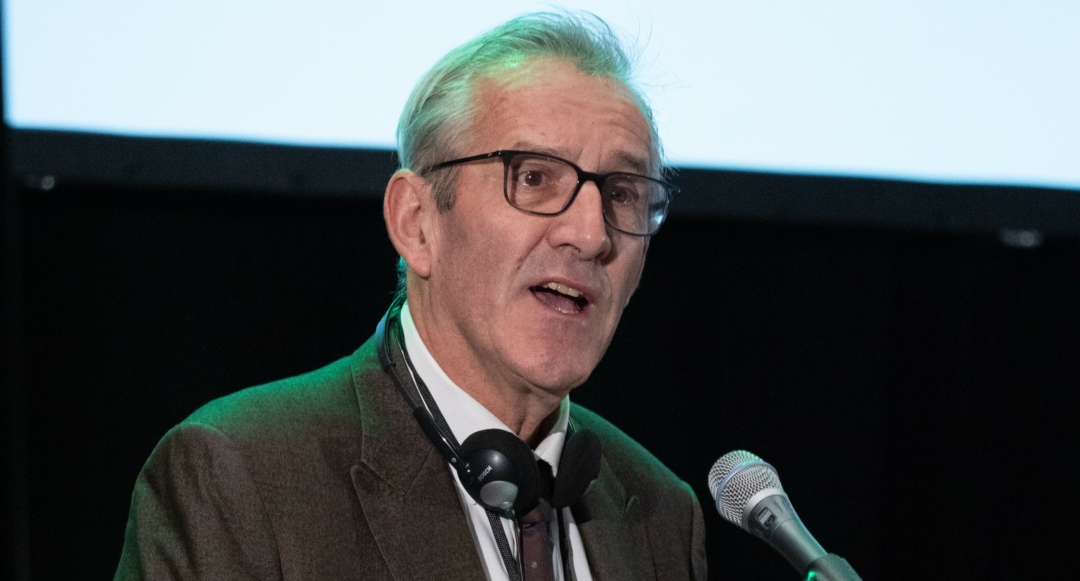
Interview : Benoit Savourat Hemp, every which way! From 24 to 26 November 2026, Troyes will host the World Hemp Forum, the leading global event dedicated to the development of hemp value chains and their industrial applications, organised by the Hemp European Hub. At a time when industrial sovereignty, decarbonisation and the development of bio-based materials have never been higher on the agenda, the hemp sector continues to weave its future into construction, textiles, food and composites. To make the leap to a larger scale, one challenge stands out: drawing the threads of the entire value chain closer together, from agricultural production all the way through to industrial outlets. To take stock of the changes under way, the industrial challenges and the opportunities ahead, Benoit Savourat, co-founder of the Hemp European Hub and a historic figure of the French sector, shares his vision of a trailblazing industry with a truly global reach. Here’s what he had to say.
Here’s what he had to say.
What major changes have you seen in the sector in recent years?
Benoit Savourat: “For a long time, hemp remained a fairly niche crop. Over the past few years, we’ve seen a real shift. That momentum shows on the ground: cultivated areas have grown significantly, with 173,112 hectares of hemp recorded worldwide in 2024. Environmental concerns, the search for bio-based materials and the drive to bring certain types of production back home are fuelling growing interest.
The COVID period also played a major role. It exposed the fragility of certain supply chains and pushed many businesses to rethink their models. We see this particularly clearly in construction and textiles. Manufacturers understand they need to find other solutions, and hemp is one of the options they’re seriously looking at. It’s a crop that needs few inputs, no irrigation, and offers particularly strong environmental performance.”
How would you describe the state of the French market today?
Benoit Savourat : “France now has recognised expertise, a significant technical lead and a particularly well-structured ecosystem. With 24,600 hectares under cultivation in 2024 — close to a third of Europe’s total hemp acreage — France also has a production base that reinforces this leadership. This position is the result of several decades of investment, research, innovation and cooperation among industry stakeholders. The strength of the French model lies in having gradually built a complete value chain, from agricultural production through to industrial applications. This experience is now drawing interest from many regions and countries looking to develop their own hemp sector. To hold on to our position as the international benchmark, we need to keep investing in research, training, market development and innovation.”
“Hemp is a sector built over the long term.”
Which markets offer the strongest growth prospects?
Benoit Savourat: “I don’t think we can single out one market over another, because everything is connected. For hemp shives, construction is clearly a key driver. For the seed, the prospects in human food are significant. As for fibre, textiles probably represent one of the greatest potentials for growth.”
What are the main challenges today in supporting the sector’s scale-up?
Benoit Savourat : “The main challenge lies in our ability to produce the volumes the markets need. French cultivated areas have already doubled over the past ten years, but supporting the growing demand from markets will mean keeping up this momentum in a gradual and coordinated way. When we talk with major industrial groups — whether in food, textiles or materials — they think in terms of thousands of tonnes. If we want to meet that demand, farmers need to invest, harvesting techniques need to keep improving, processing facilities need to plan ahead for future needs, and the whole sector needs to be able to plan several years in advance. Hemp is a sector built over the long term.”
“To develop the sector sustainably, every stakeholder has to play as a team.”
What role do manufacturers have to play in this momentum?
Benoit Savourat: “An absolutely central one. If we want to grow the sector, more companies need to get involved. We need manufacturers capable of integrating hemp into their products and investing in innovation, processing and the development of new markets. Textiles are a good example. Many players are now looking for alternatives to synthetic fibres, and hemp is one of the solutions being explored.”
You regularly emphasise the idea of collective work. Why is it so important? Why is it so important?
Benoit Savourat: “Because you can’t think in silos. A textile manufacturer may be primarily interested in the fibre. But they also need to care about the outlets for hemp shives or seed. Without full use of the whole plant, there won’t be enough agricultural production to meet their needs. To develop the sector sustainably, you have to think as an ecosystem: every stakeholder has to play as a team.”
“France is now the reference country for industrial hemp.”
Is the sector capable today of meeting greater demand?
Benoit Savourat: “Yes, but only if that growth is gradual, anticipated and well managed. We can’t imagine exponential growth for hemp. Things have to be built step by step. We’re already working with major groups exploring different hemp-based applications. The opportunities are there. That said, we have to take agricultural and industrial realities into account.
Between the decision to develop a new market and having the necessary volumes available, several years can go by. You have to plan the agricultural land, adapt industrial equipment and organise the outlets.”
Why is France seen today as a model for the development of industrial hemp?
Benoit Savourat: “France is now the reference country for industrial hemp. This global leadership is built on a long-term vision. Over several decades, the sector has built a model that brings together agricultural production, industrial processing, research and the development of new outlets. Its strength lies in its ability to make use of every part of the plant and to get every link in the value chain working together. This expertise is now recognised internationally and is inspiring many stakeholders who want to develop their own hemp sector. The creation of the Hemp European Hub is part of this
drive for openness and international outreach.”
“The World Hemp Forum brings together every link in the hemp sector’s value chain.”
The World Hemp Forum also stands out for its international outlook. Why does that matter so much?
Benoit Savourat: “Because the challenges facing hemp go well beyond France’s borders. Europe is now the world’s second-largest hemp-growing region after China, with 54,245 hectares under cultivation. All over the world, manufacturers are looking for solutions that can address the challenges of decarbonisation, industrial sovereignty and reshoring.
At the first edition, we were surprised by the level of interest shown by so many international stakeholders. Since then, exchanges have multiplied. The World Hemp Forum is set to become a global meeting point for cooperation and the sharing of experience.”
Is that why the World Hemp Forum has become the must-attend event for the whole sector?
Benoit Savourat: “Absolutely. Because the WHF offers an approach you won’t find anywhere else. The World Hemp Forum brings together every link in the value chain, from the grower right through to market, in the same spirit of collective adventure that drives the Hemp European Hub. The Hub and the WHF share the same goal: supporting stakeholders who want to develop a hemp sector in their own region, by sharing the experience built up around Troyes to help them avoid the mistakes that can derail otherwise promising projects.
In Troyes, the world capital of industrial hemp, World Hemp Forum participants will be able to meet farmers, visit a processing facility, discover applications in construction, textiles, food and composites, and talk with researchers, manufacturers and entrepreneurs from many different countries. Above all, they’ll come away understanding why France has become the world’s benchmark for the sector, and get a first-hand look at the methods, organisation and know-how that have allowed the French sector to take shape. Anyone with an interest in hemp will leave with a clear picture of the opportunities for growth and what it takes to build a high-performing, sustainable hemp sector. We’re ready to share what makes our French model so strong!”
To register for the World Hemp Forum, click here!